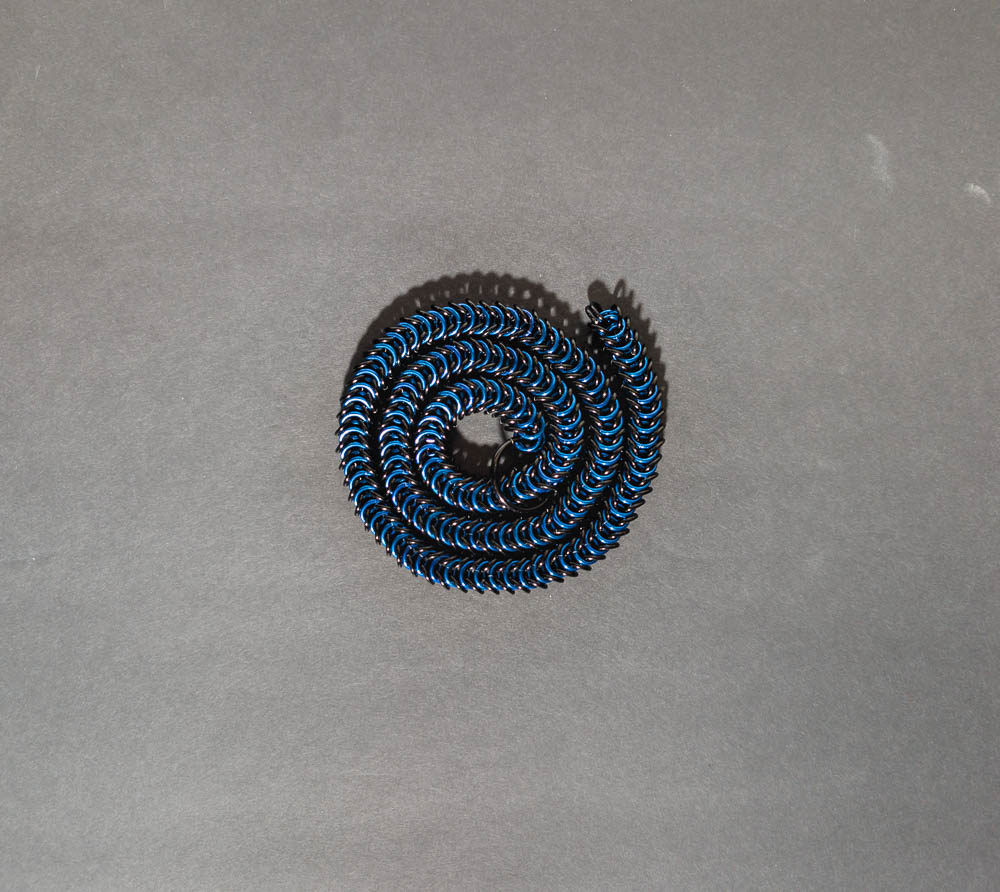
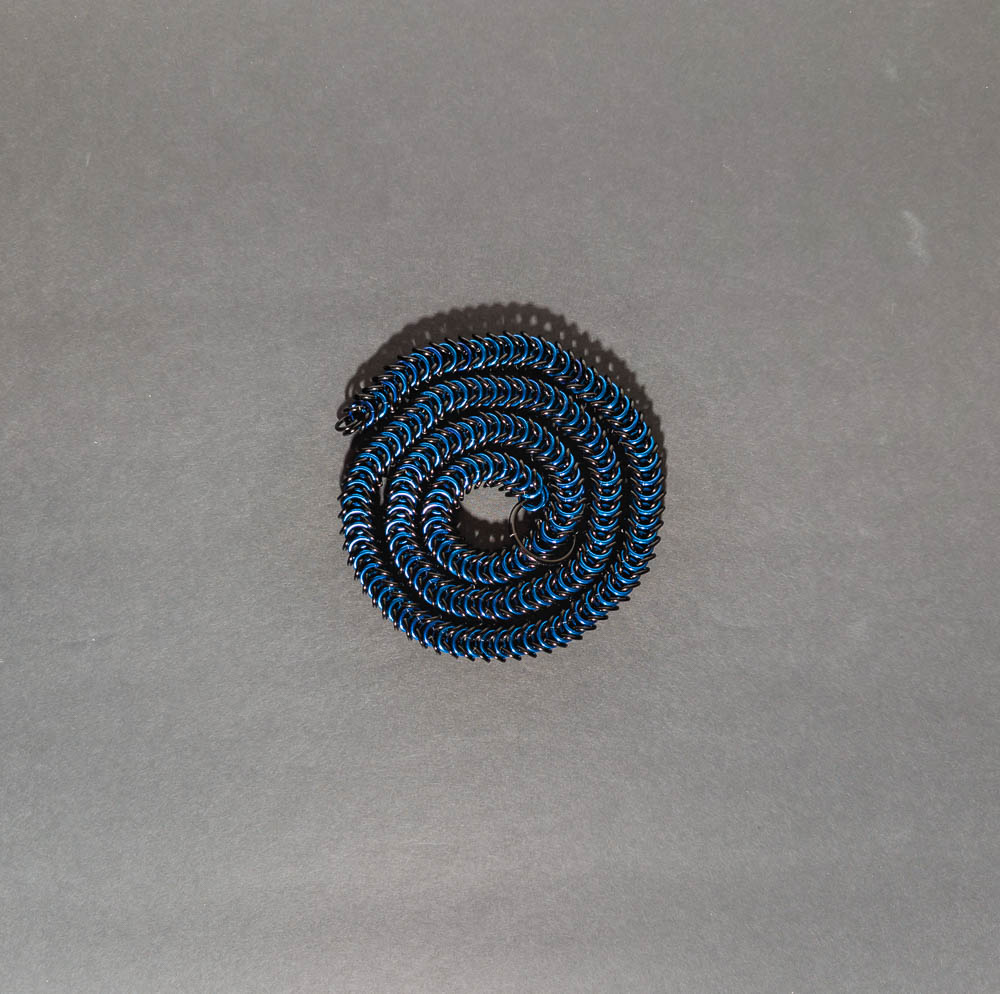
Slip Chain Necklace
Overview
A friend of mine recently learned about slip chain necklaces, thought they could make fun wearable fidgets, and brought it up since I make chains. I liked the idea, so I agreed to make one for them. Overall, the project was a success since my friend and I both like the result.
Materials
I bought all the rings used in this project from The Ring Lord. Here are the rings used in this project:
| Item | Option Details |
|---|---|
| Large Bright Black Rings | 12 SWG, 3/4” ID Bright Aluminum rings in black |
| Small Bright Black Rings | 16 SWG, 1/4” ID Bright Aluminum rings in black |
| Small Bright Royal Blue Rings | 16 SWG, 1/4” ID Bright Aluminum rings in royal blue |
Notes
Picking A Weave
Since slip chains have rings moving over the chain frequently, I wanted to use a smoother weave with a smaller cross-section. Unfortunately, my friend found most of the safe weaves boring and kept suggesting spiky weaves with a large cross-section, such as Celtic Visions. After taking some time and making samples demonstrating the issues with larger/pointy chains, we settled on using Box Chain 4-in-1.
Sizing Ending Rings
To find a ring large enough for the chain to go through, I started by making a short sample of Box Chain with rings I had on hand, then tested rings against it. I started with my largest chainmail rings, my handmade 10mm ID rings; sadly, they were too small. I ended up testing a 3/4” ID split ring from a key chain, which worked, and thus I found my target. When ordering from The Ring Lord, the thinnest rings I could find with a 3/4” ID were 12 SWG, the thickest rings I have ever ordered.
Making the Chain
I found making the core necklace easy, as it is plain Box Chain. I had a hard time working on the large rings with my pliers. The large rings were so thick that they kept sliding around in my pliers, getting scratched. After scratching my second large ring, I tried bending one with my bare hands; to my surprise, it worked well. I ended up using my hands to add both rings since that was easier.
The second large ring on the end of the necklace locks the chain into a loop. A valid alternative is to use a single large ring, creating a chain that can form temporary loops. These ephemeral loops can be held in place by gravity, friction or any other way you can imagine.
Conclusion
I had a lot of fun making this necklace. I learned about slip chains, which are pretty cool; in fact, I am thinking of making a single large ring variant for myself. I ordered 12 SWG 3/4” ID rings, the largest and thickest I have ever worked with. Since I only used two large rings, I have plenty left and can experiment with using them in pendants (as suggested by someone on the Discord). Finally, my friend is happy with their chain, and it now lives in a good home being worn and appreciated, which makes me happy.
Pictures
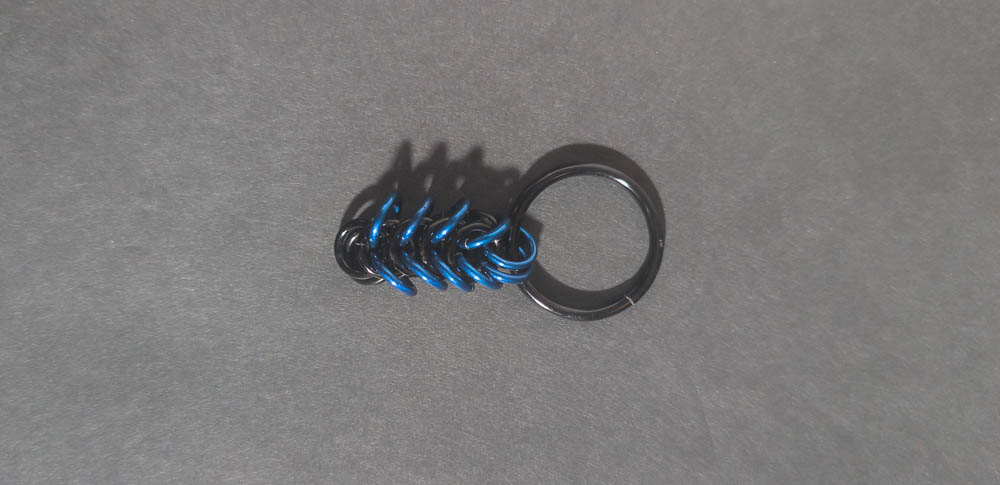
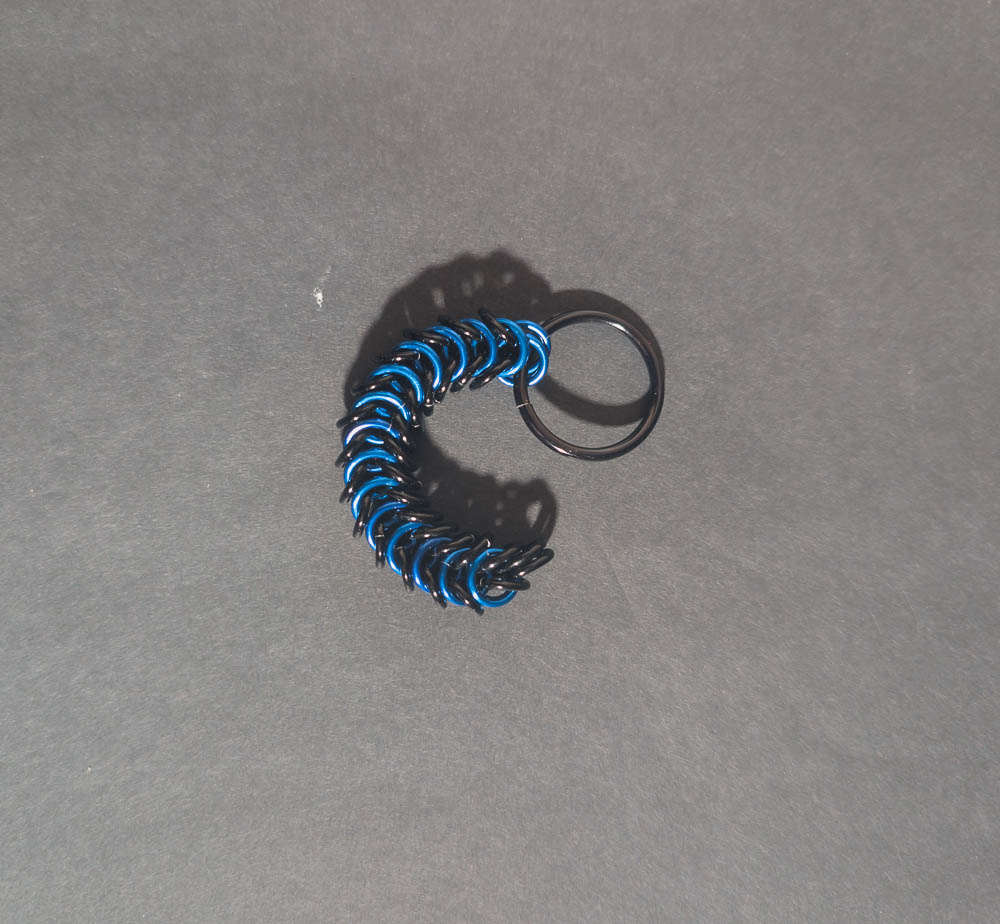
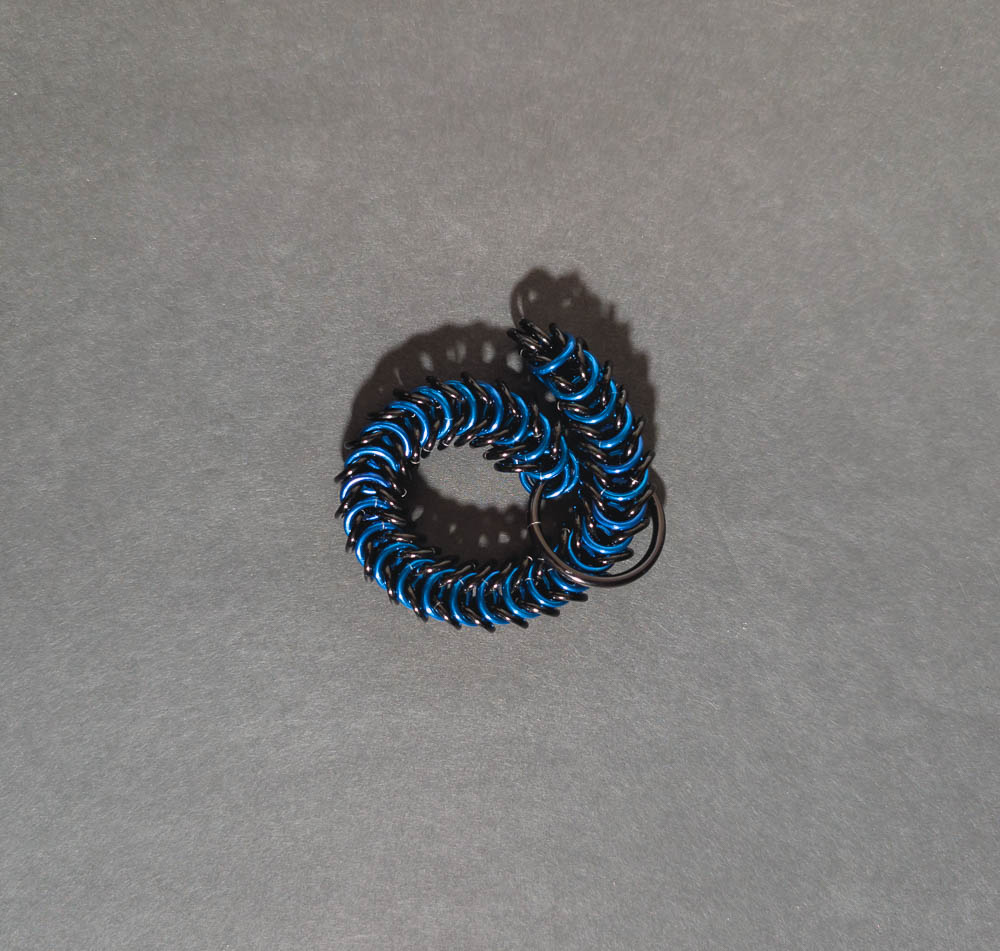
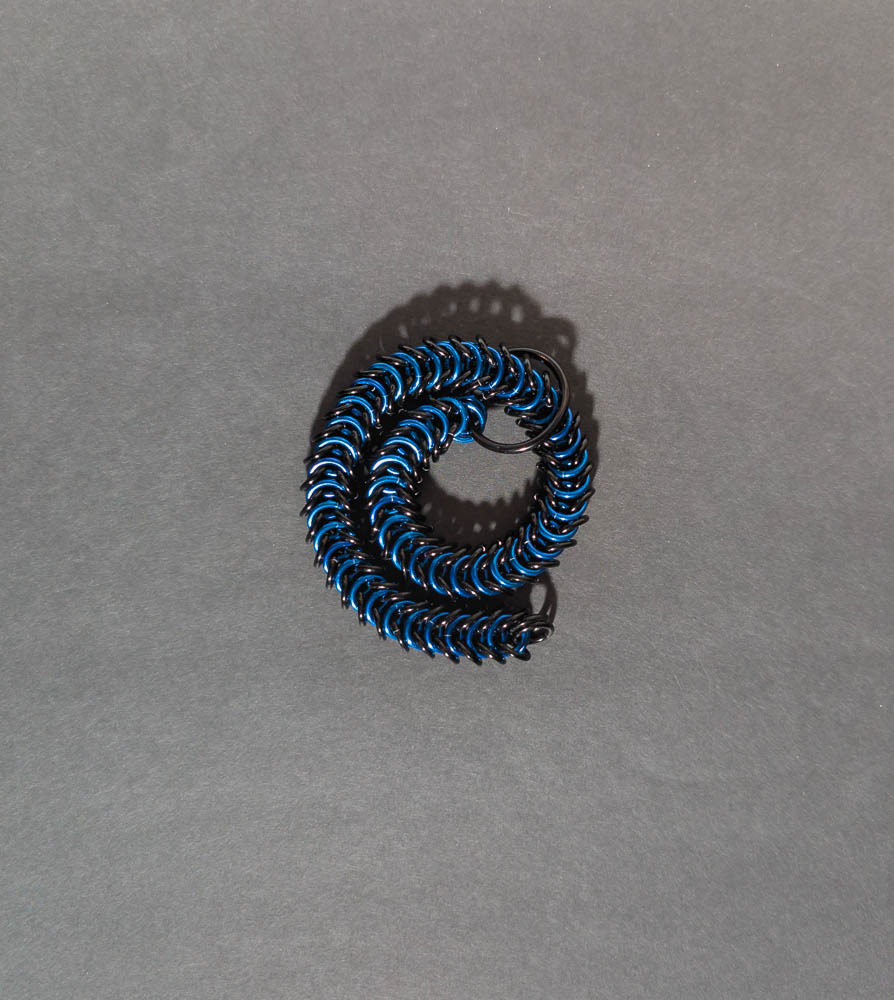
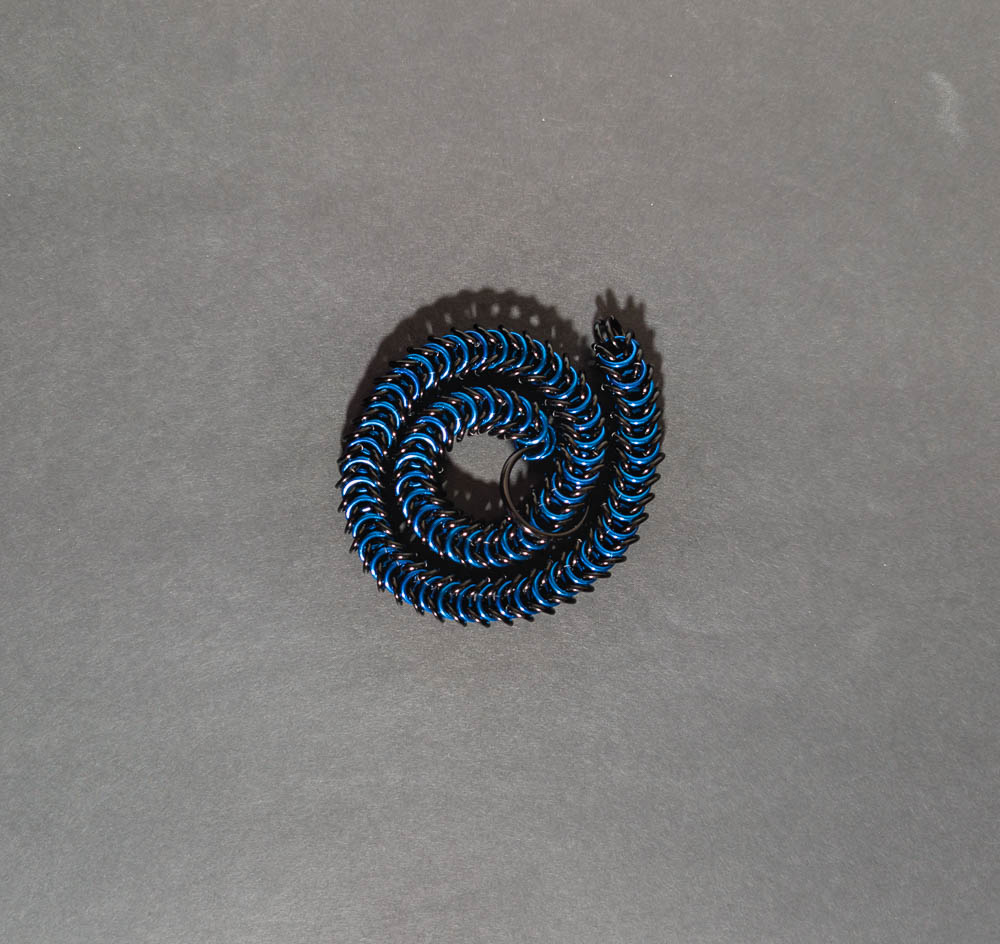
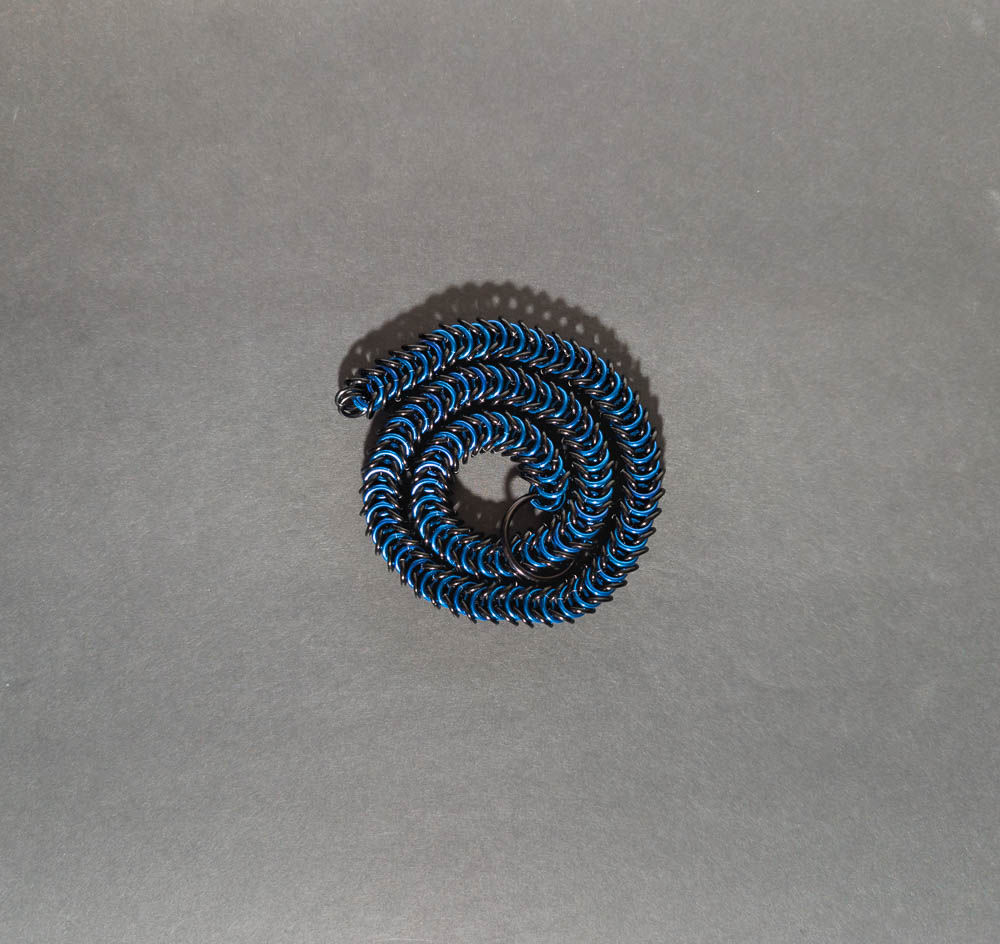
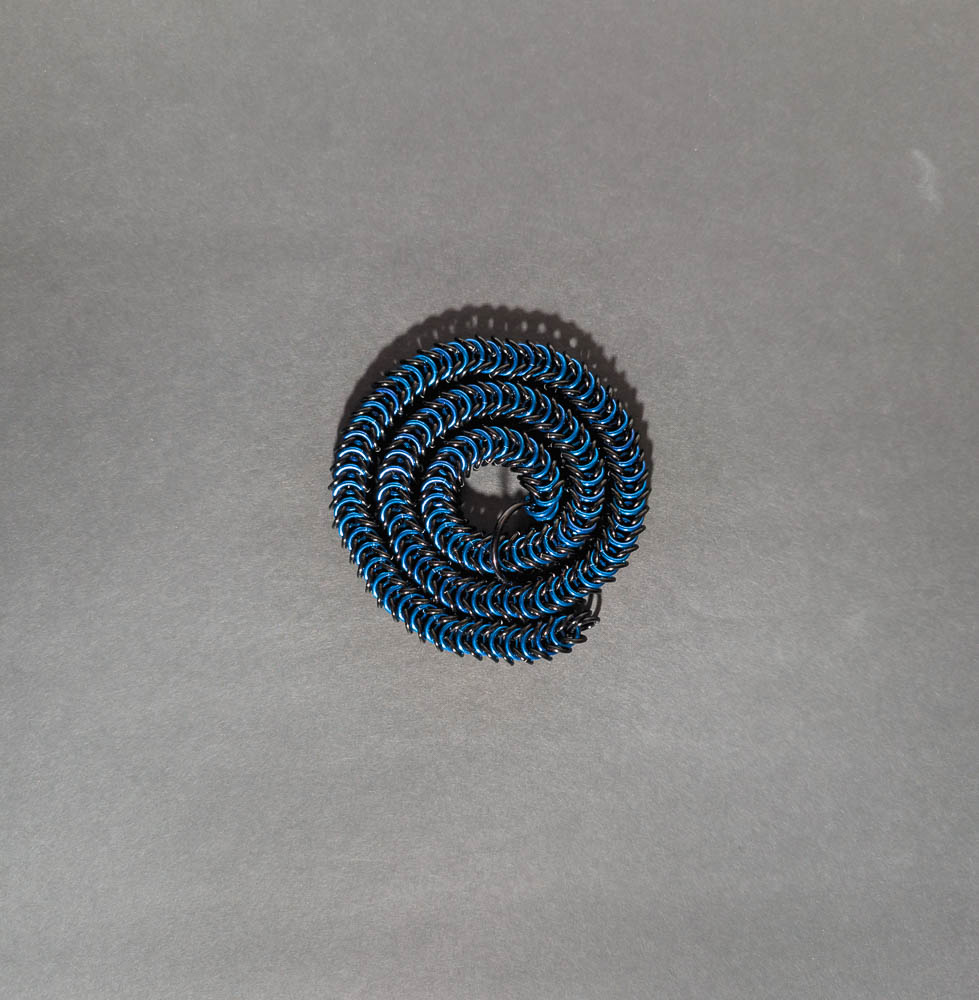
Flat: Open
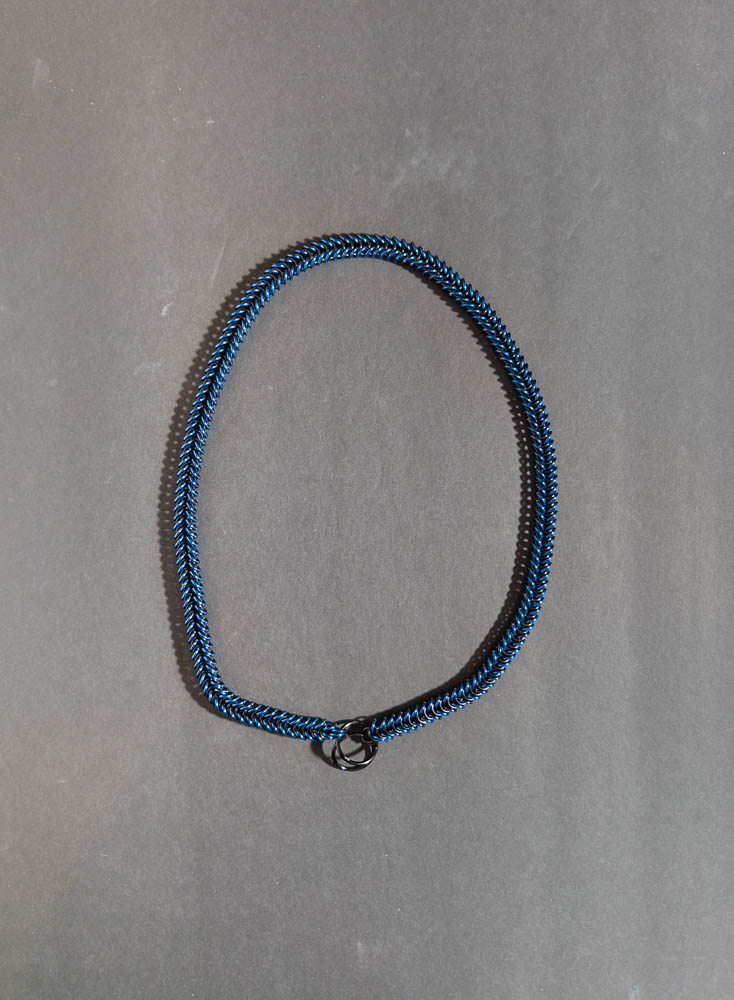
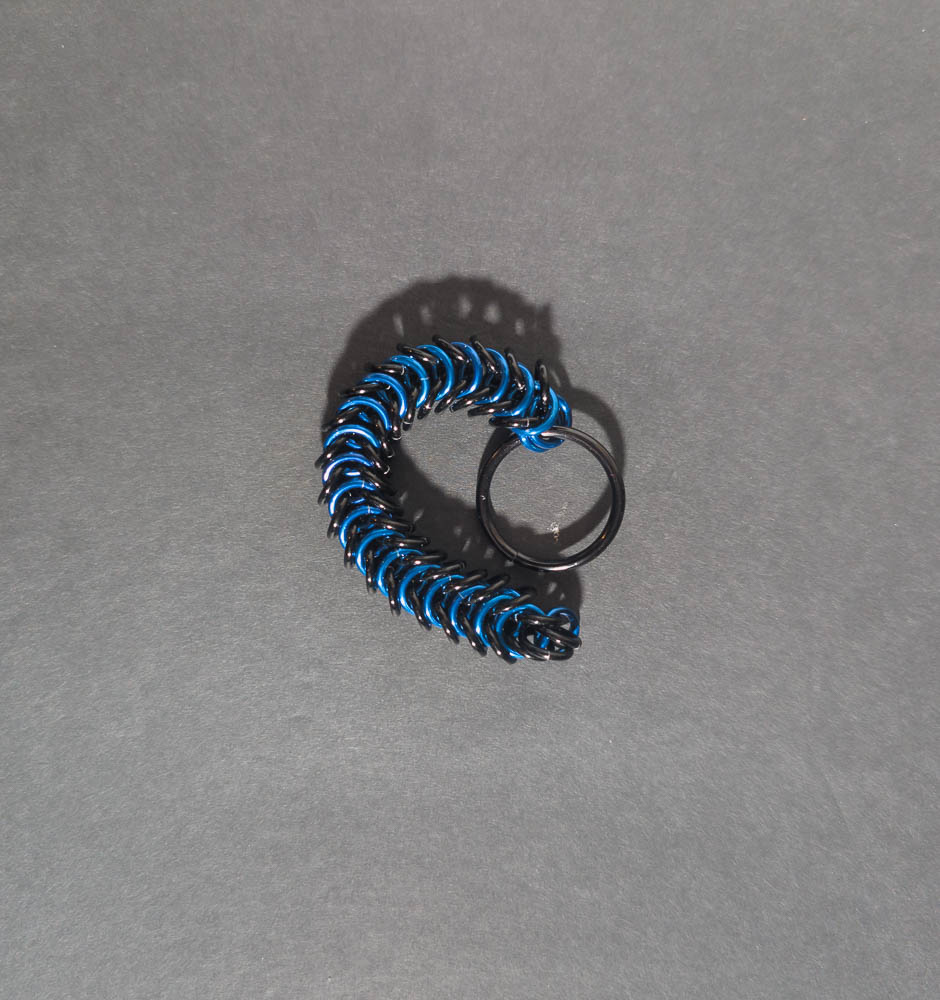
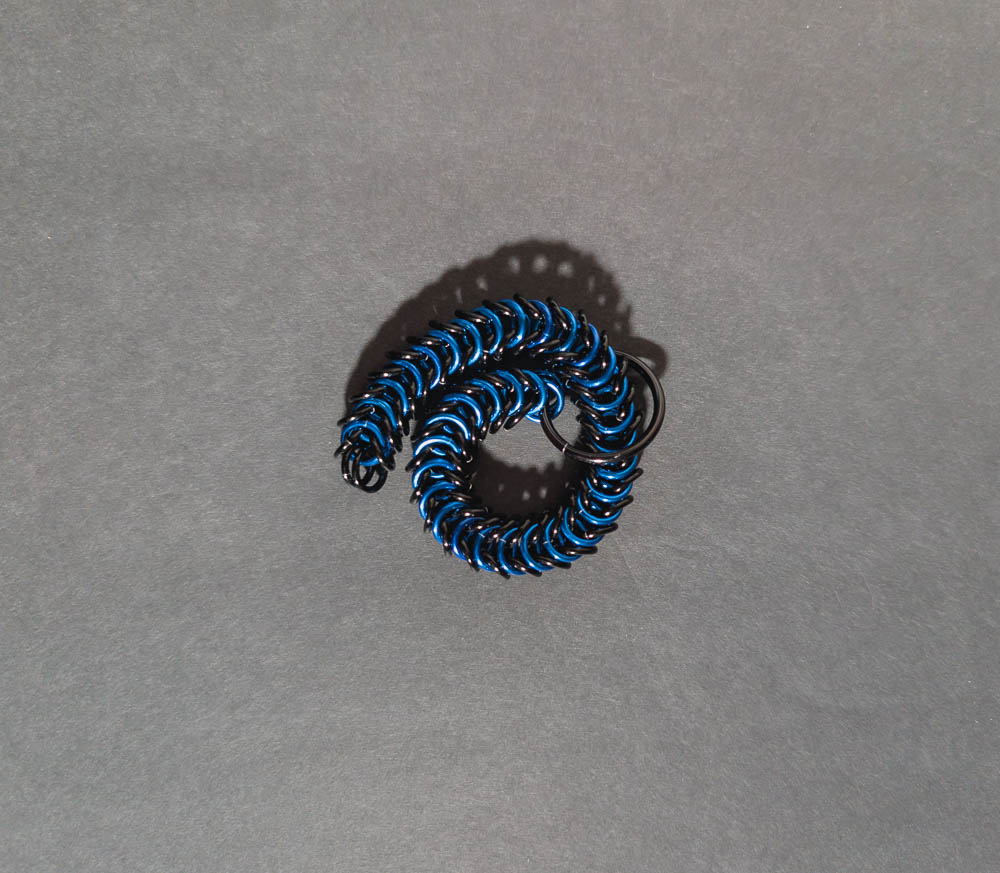
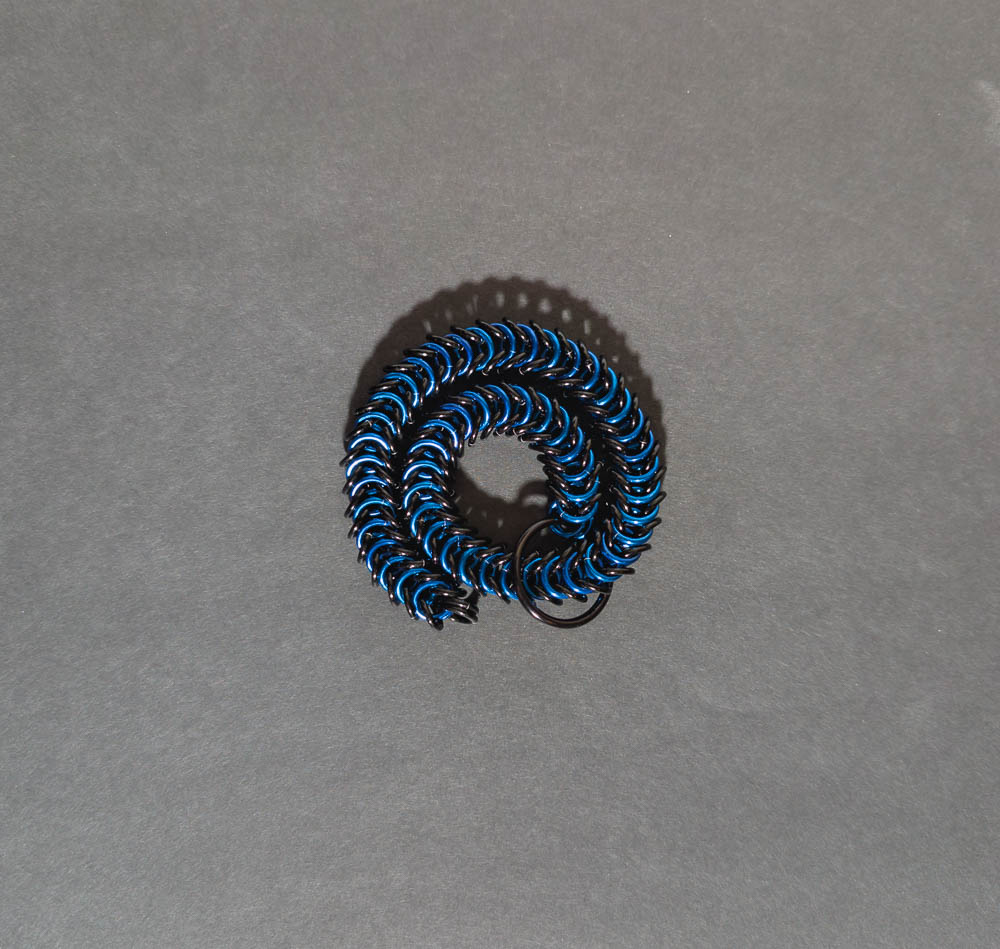
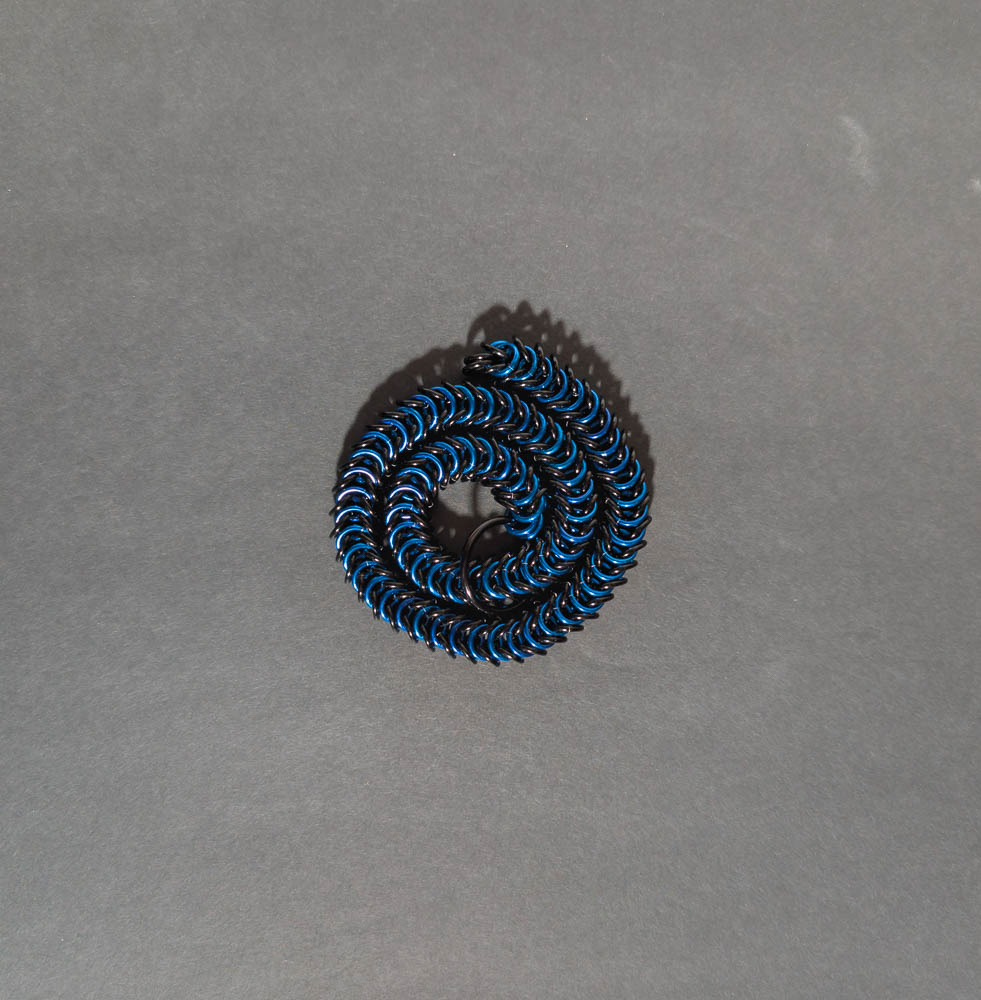
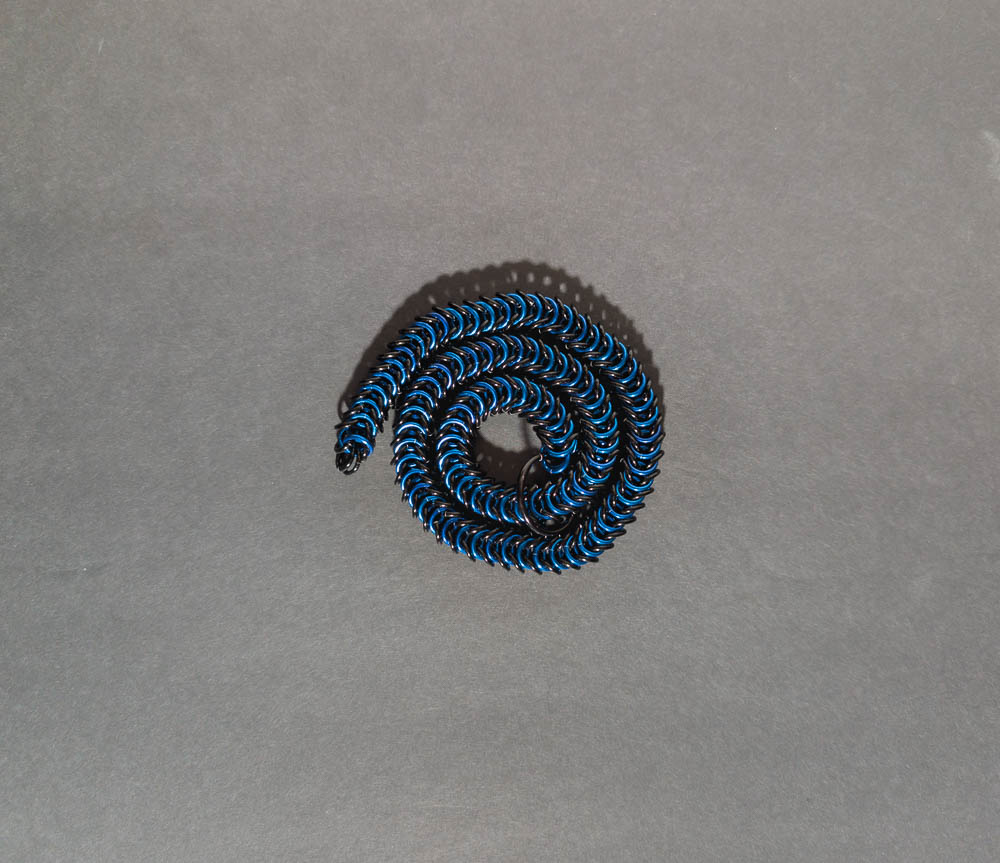
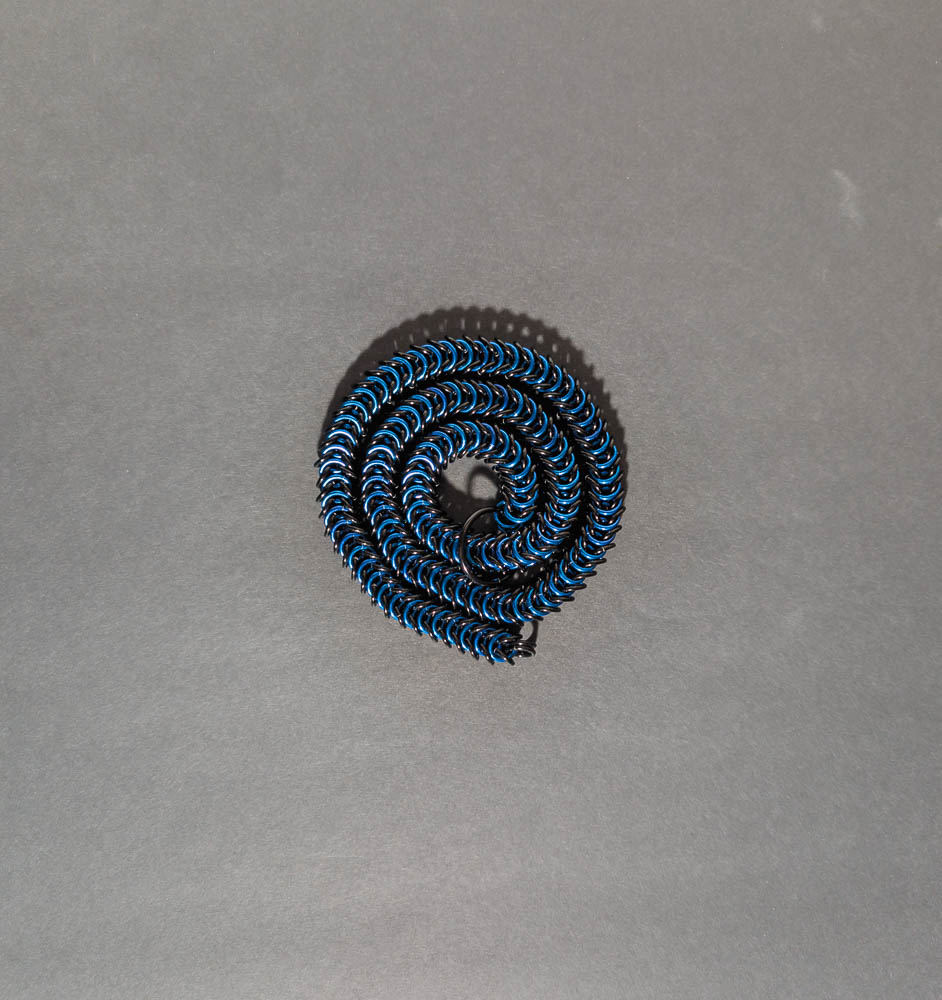
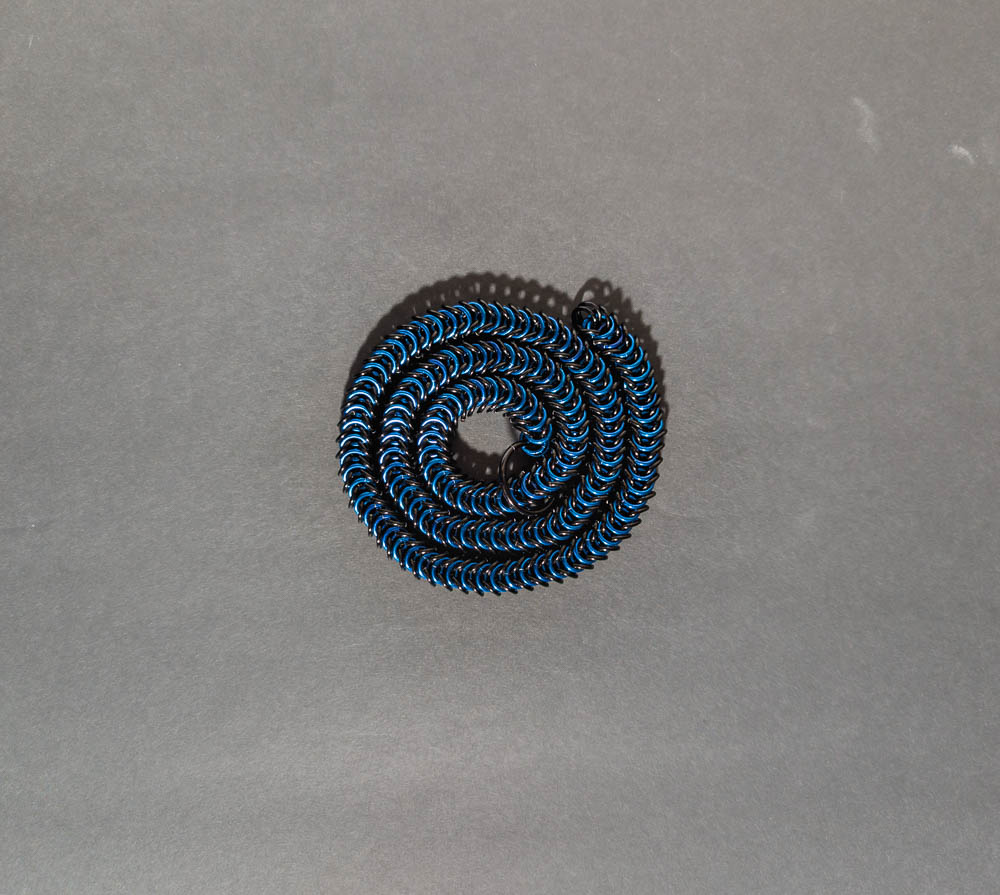
Flat: Partially Coiled
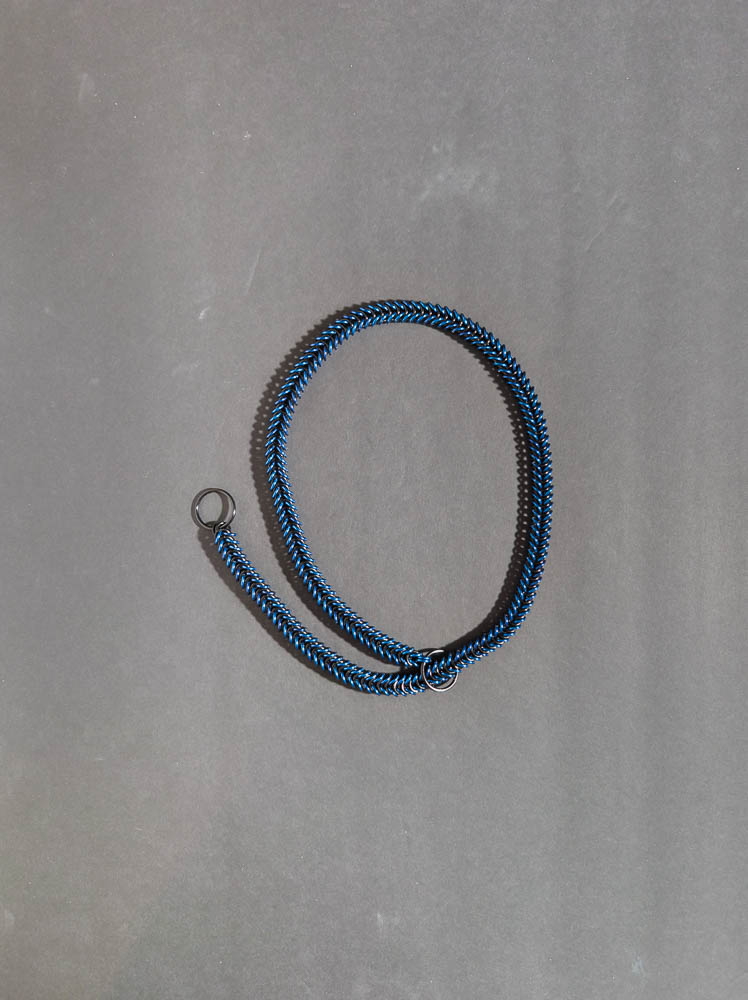
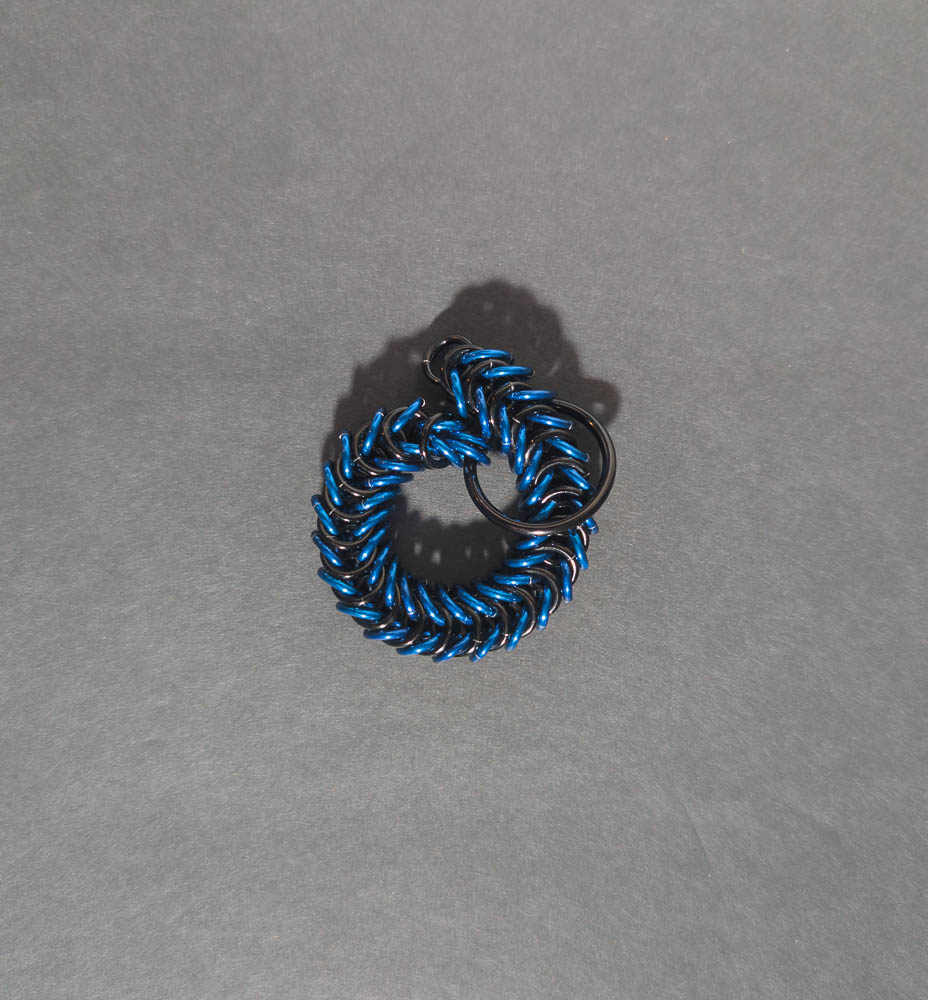
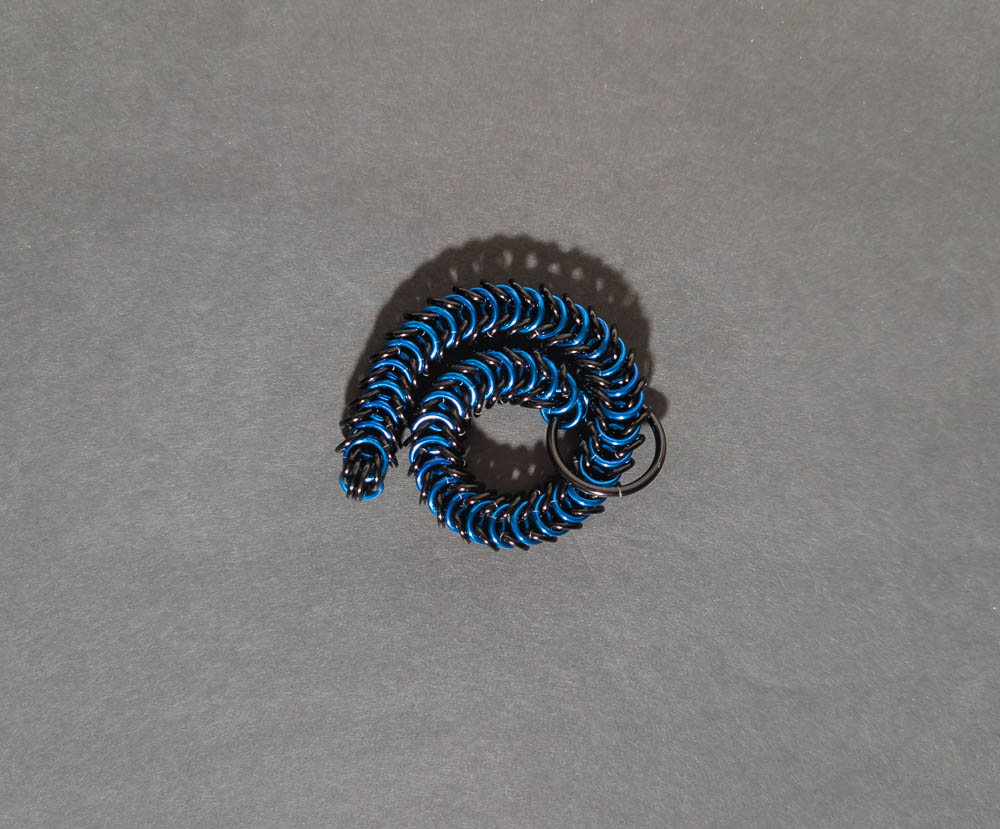
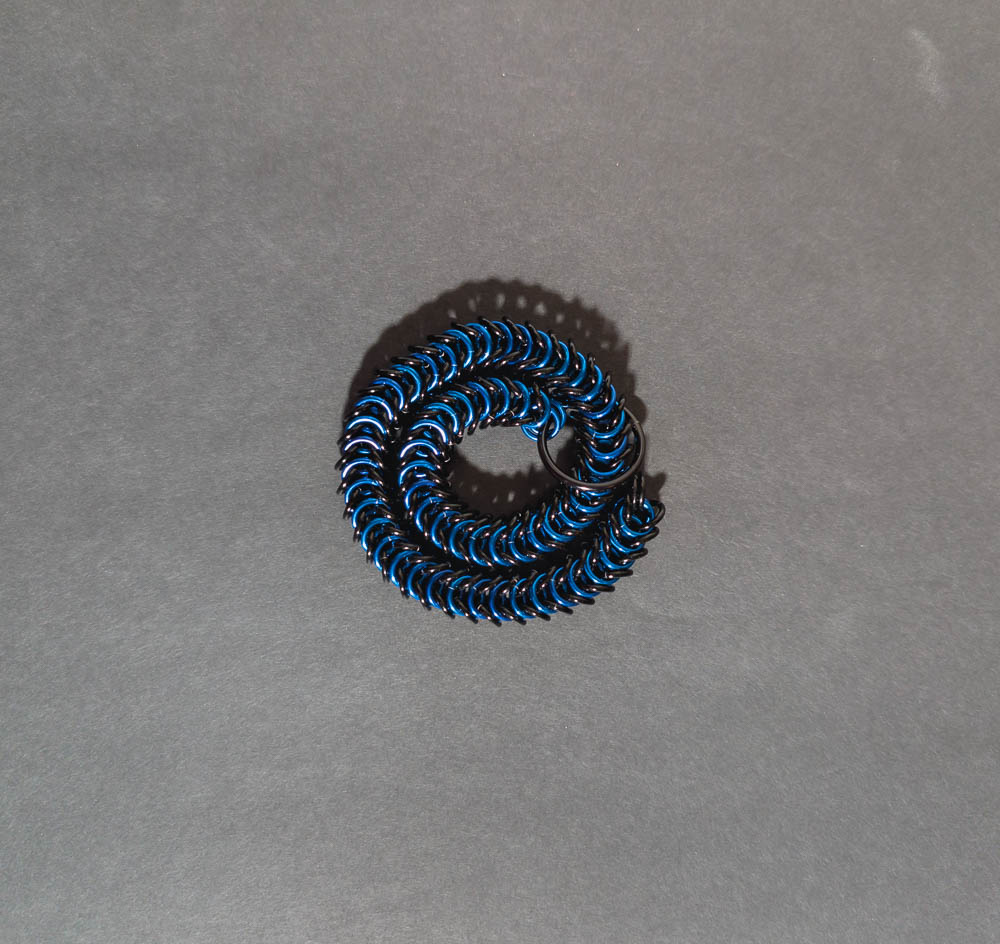
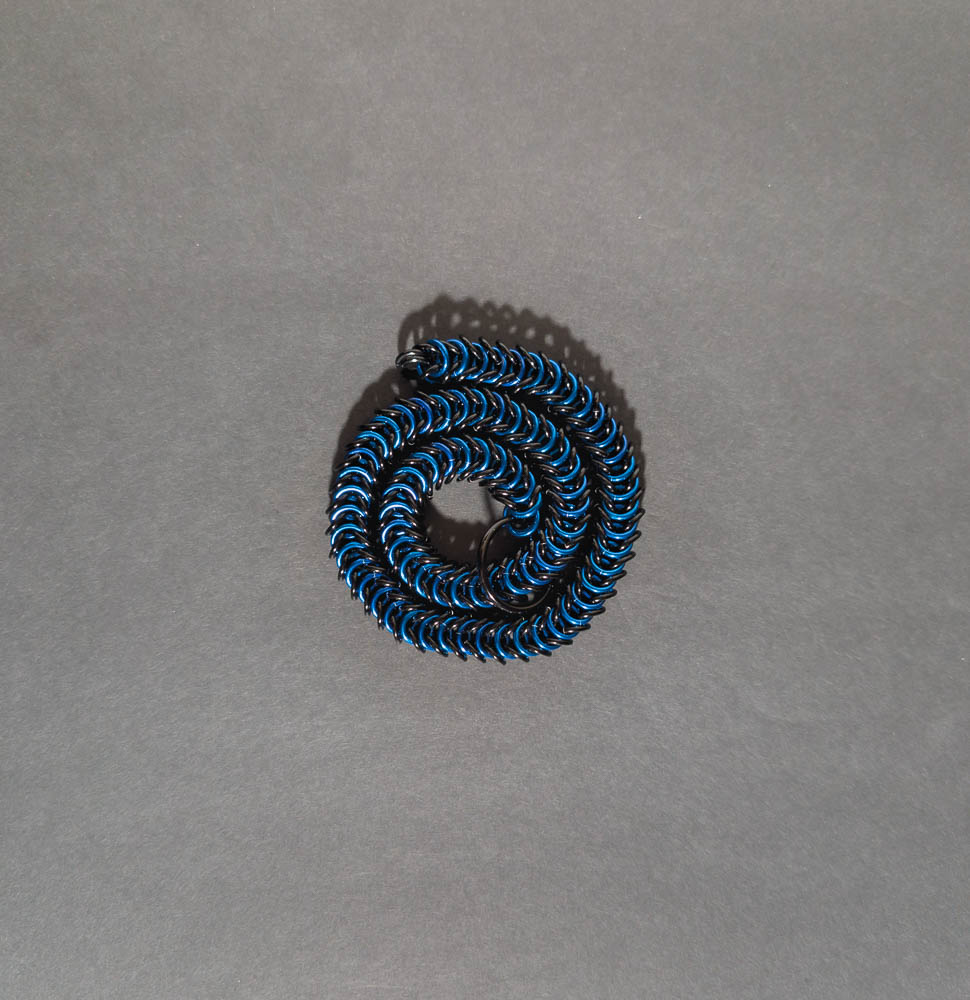
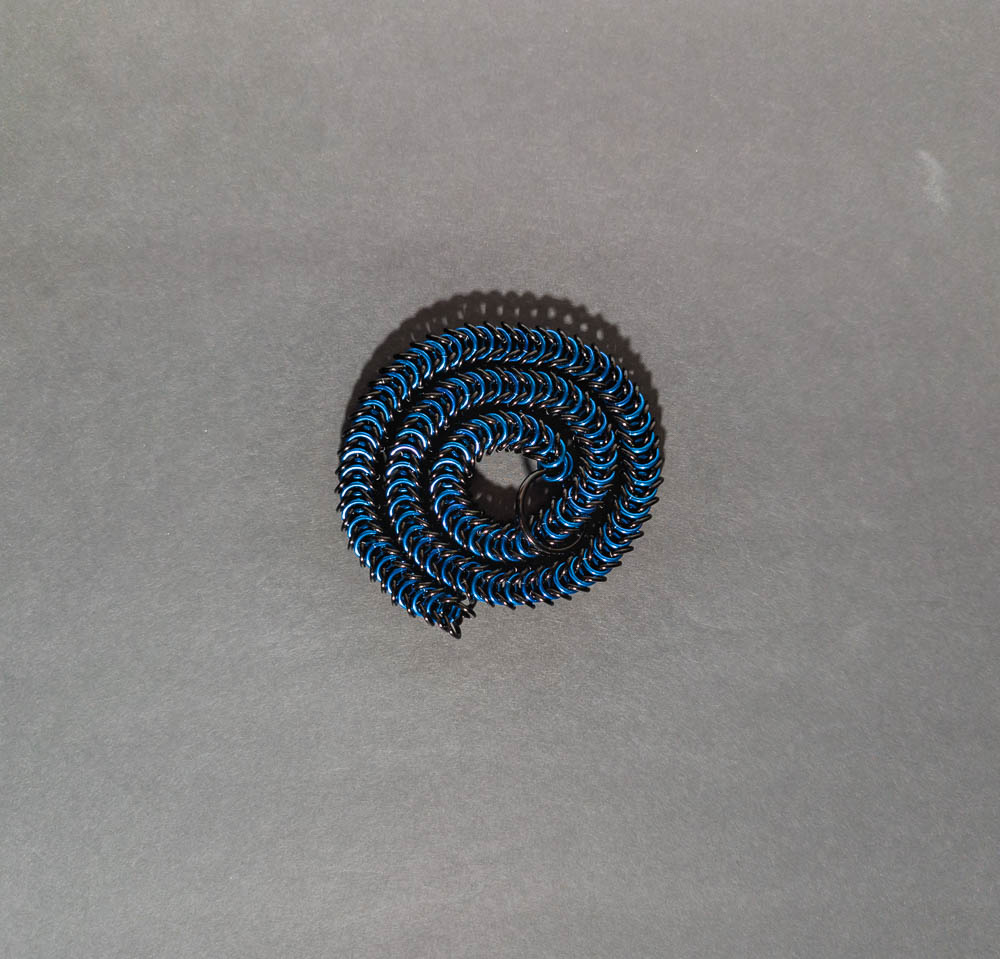
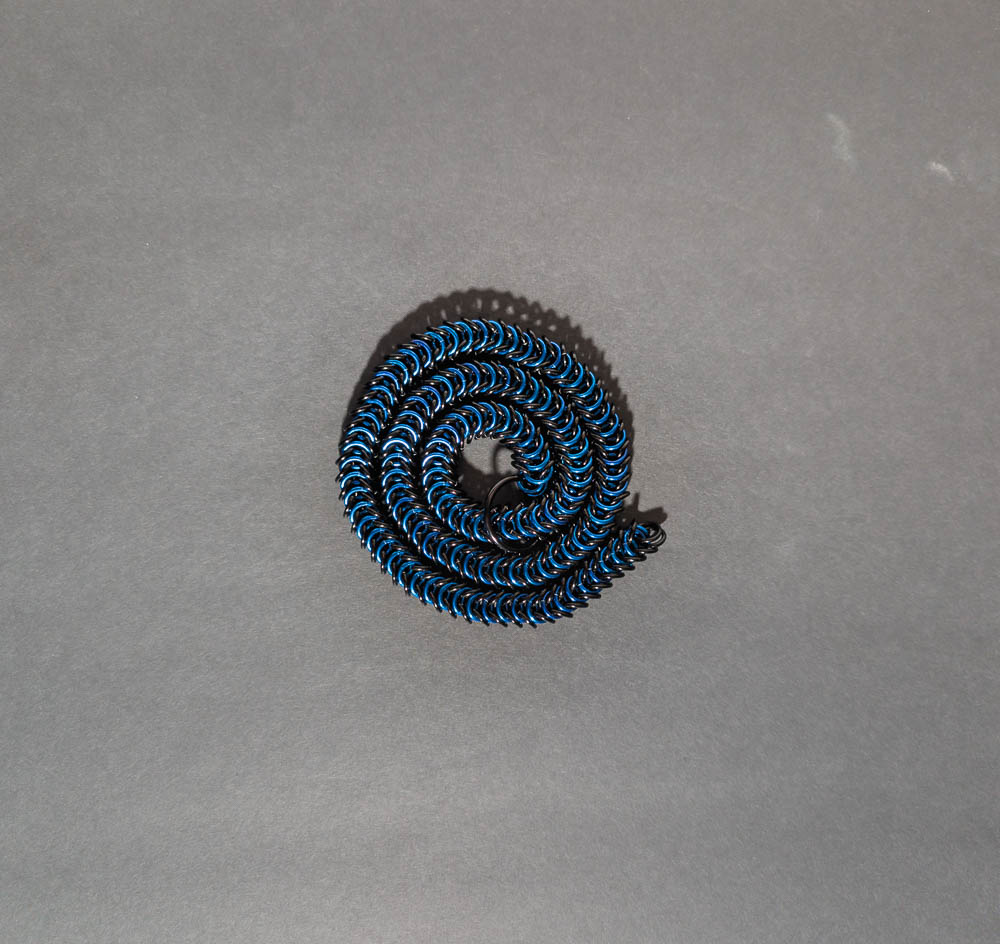
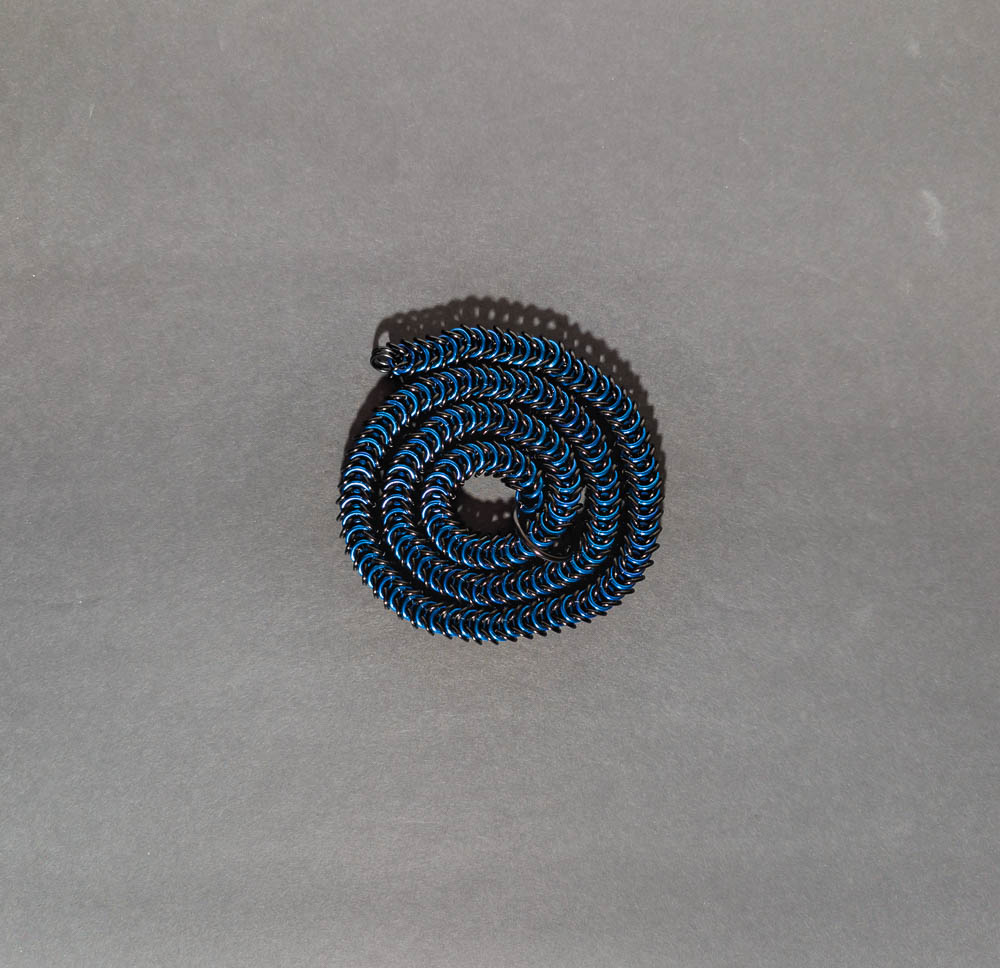
Flat: Coiled
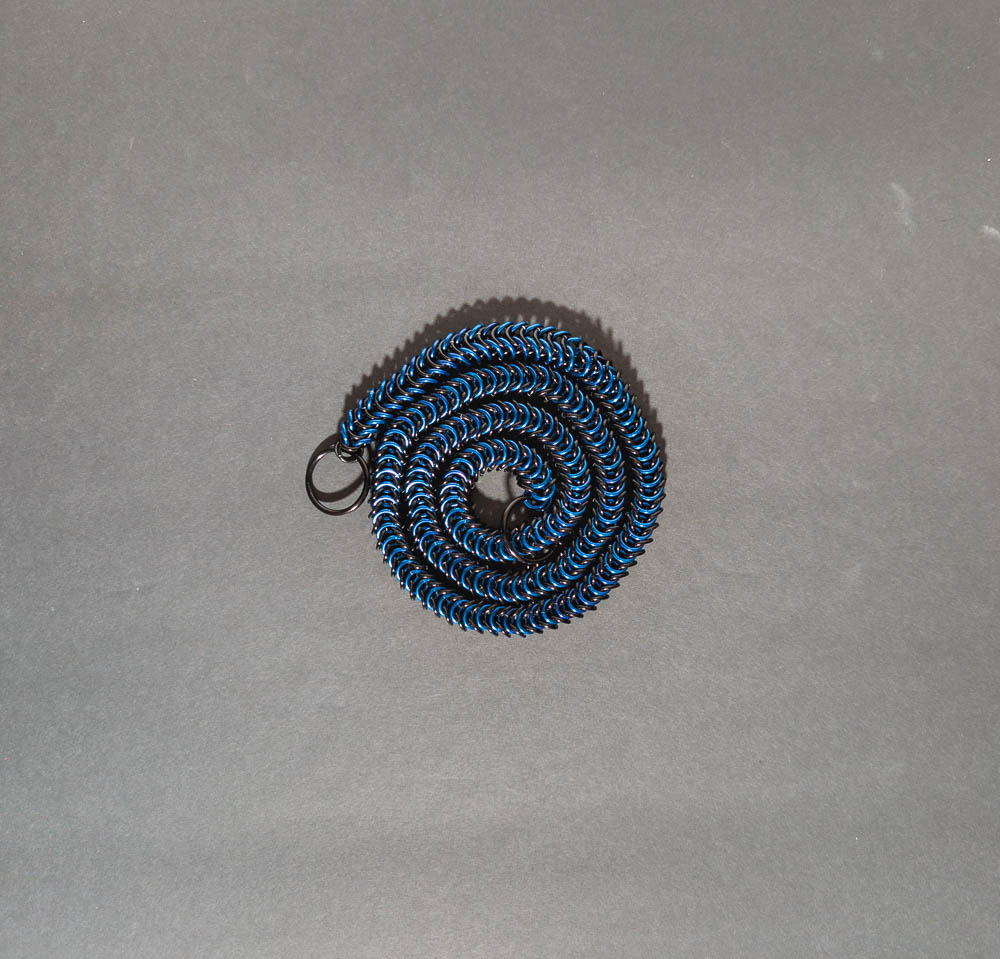
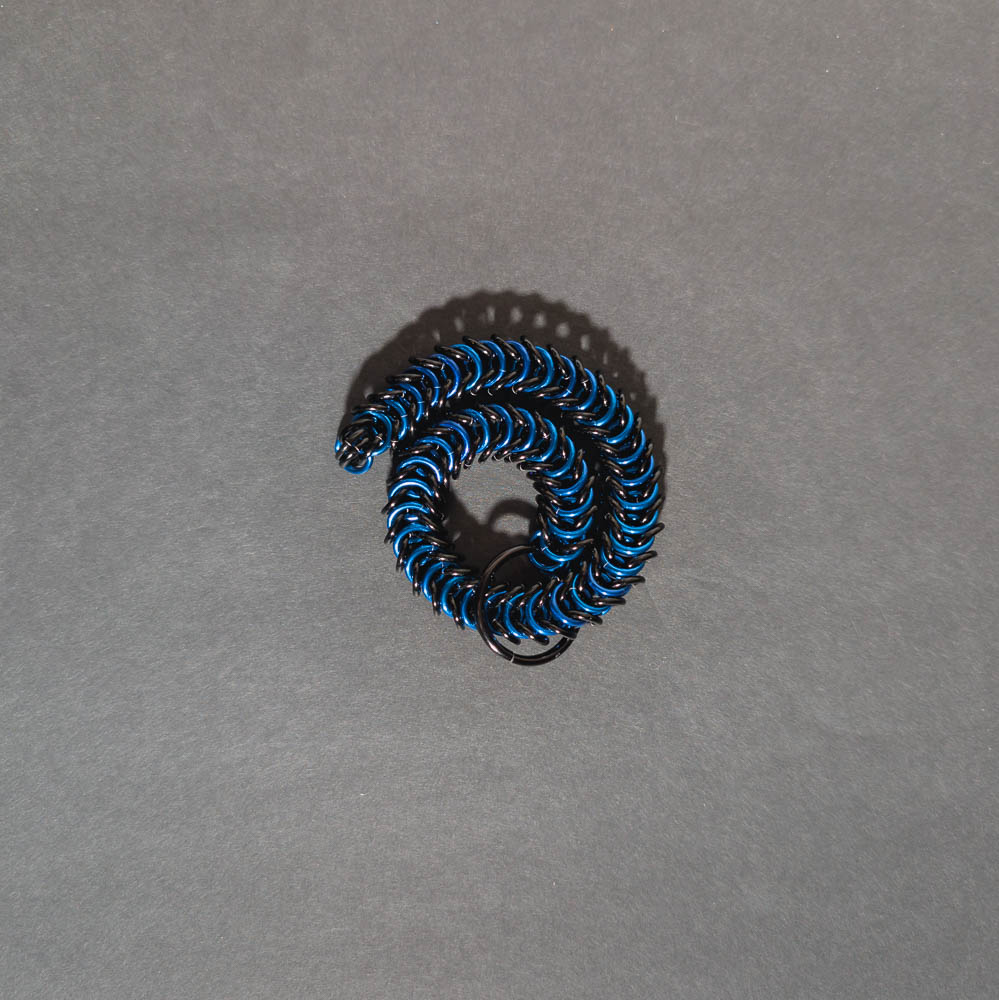
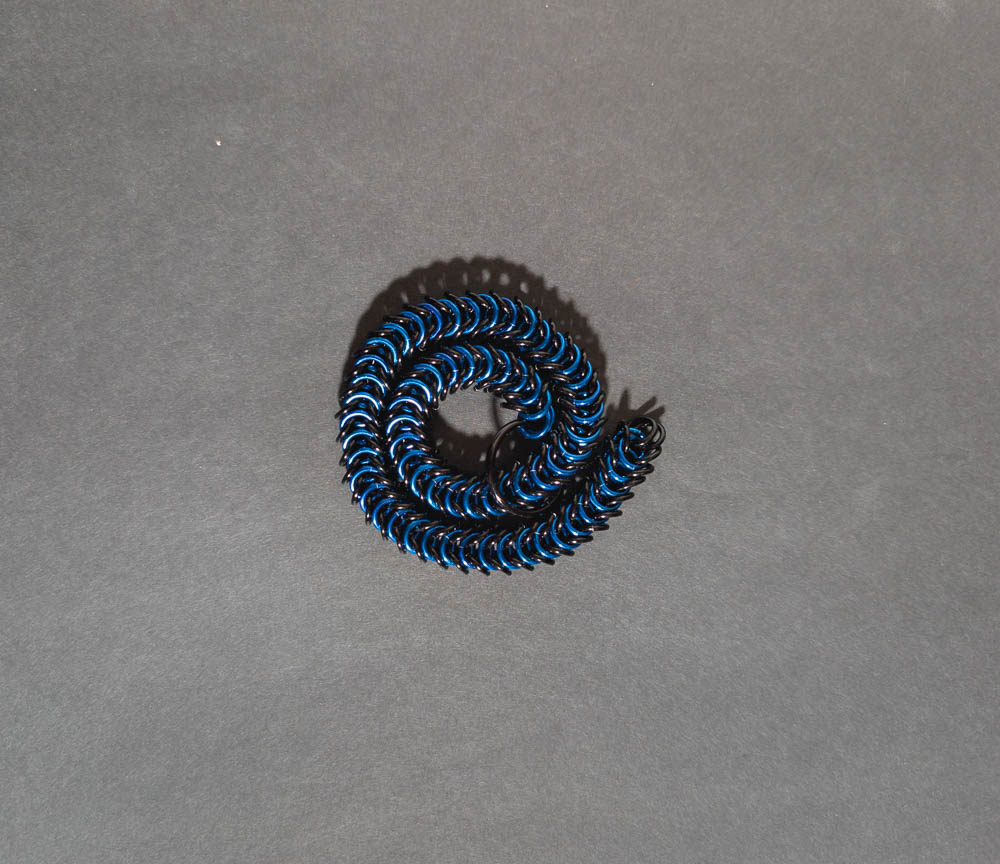
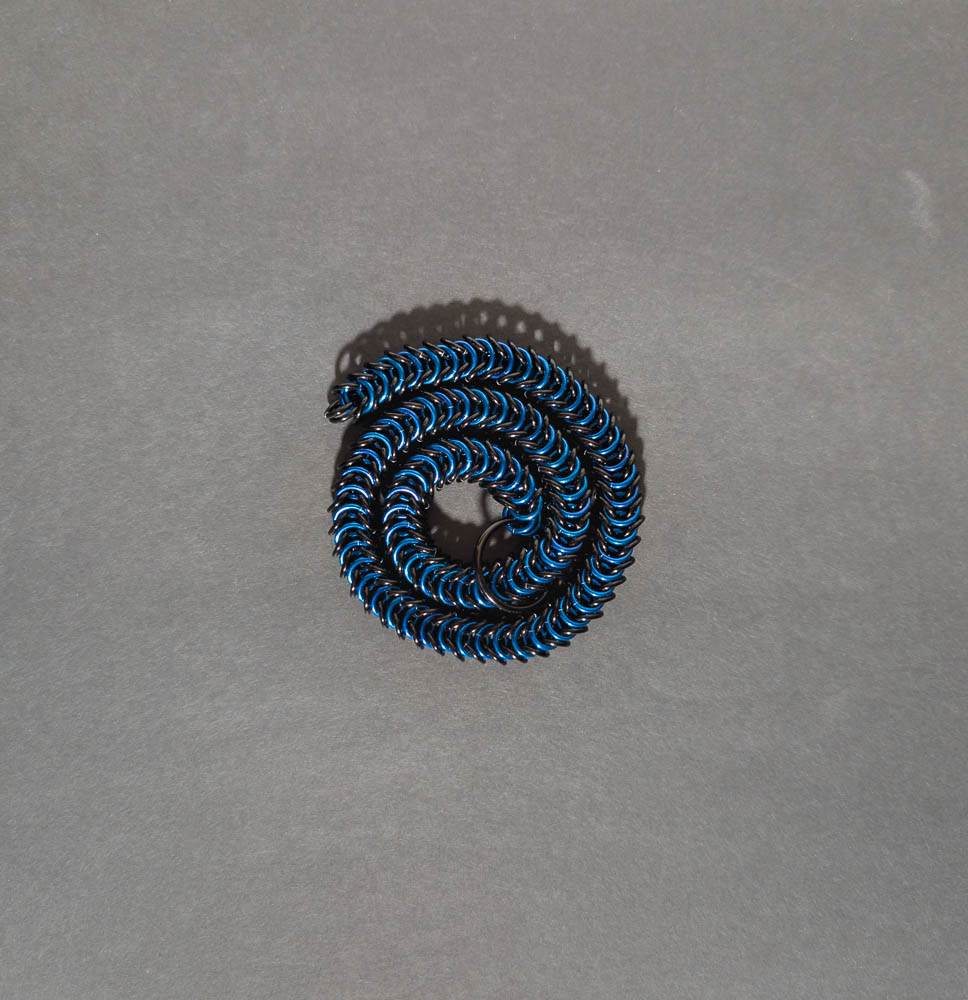
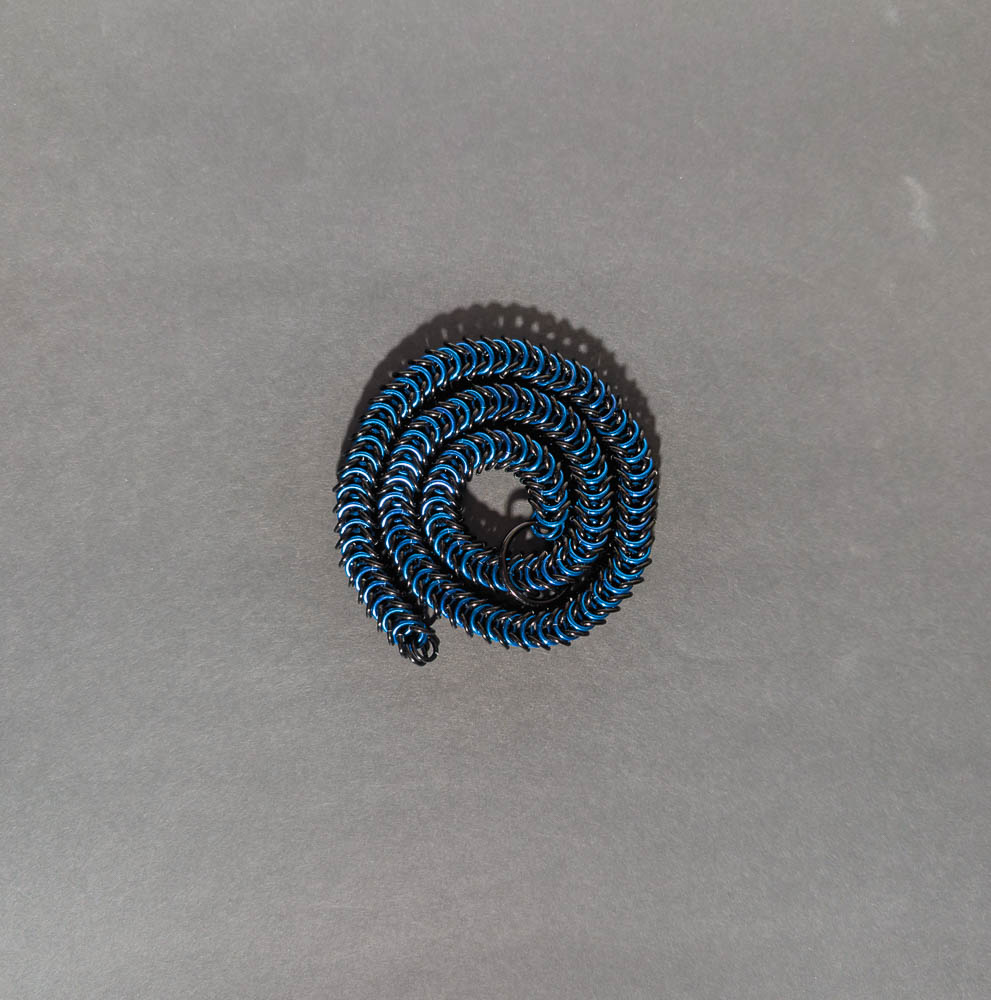
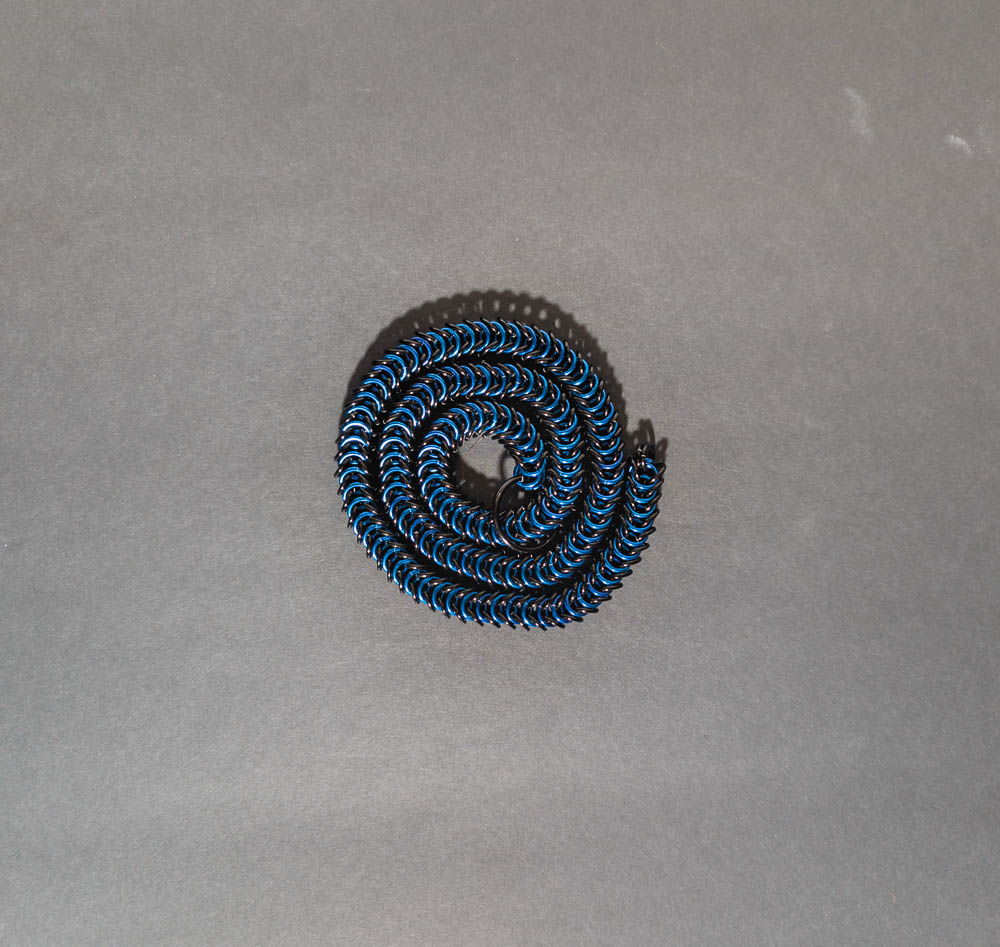
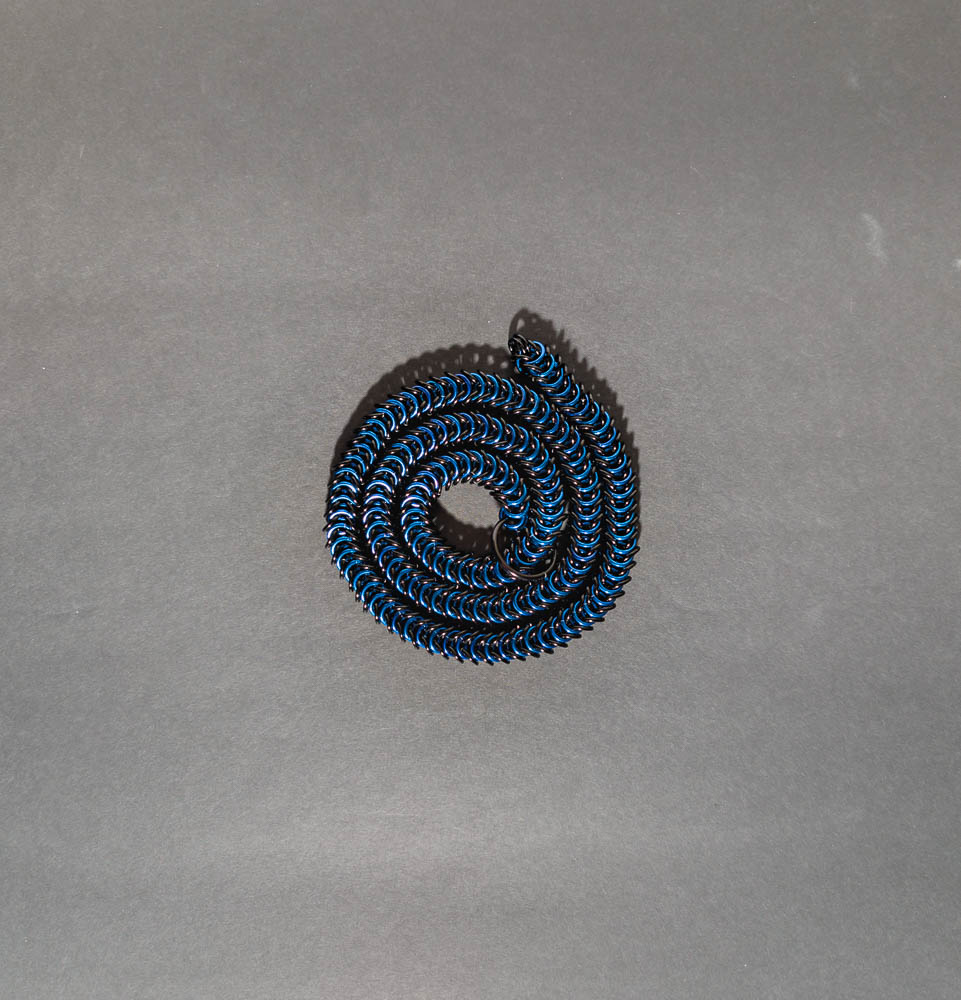
In Progress